
 中文
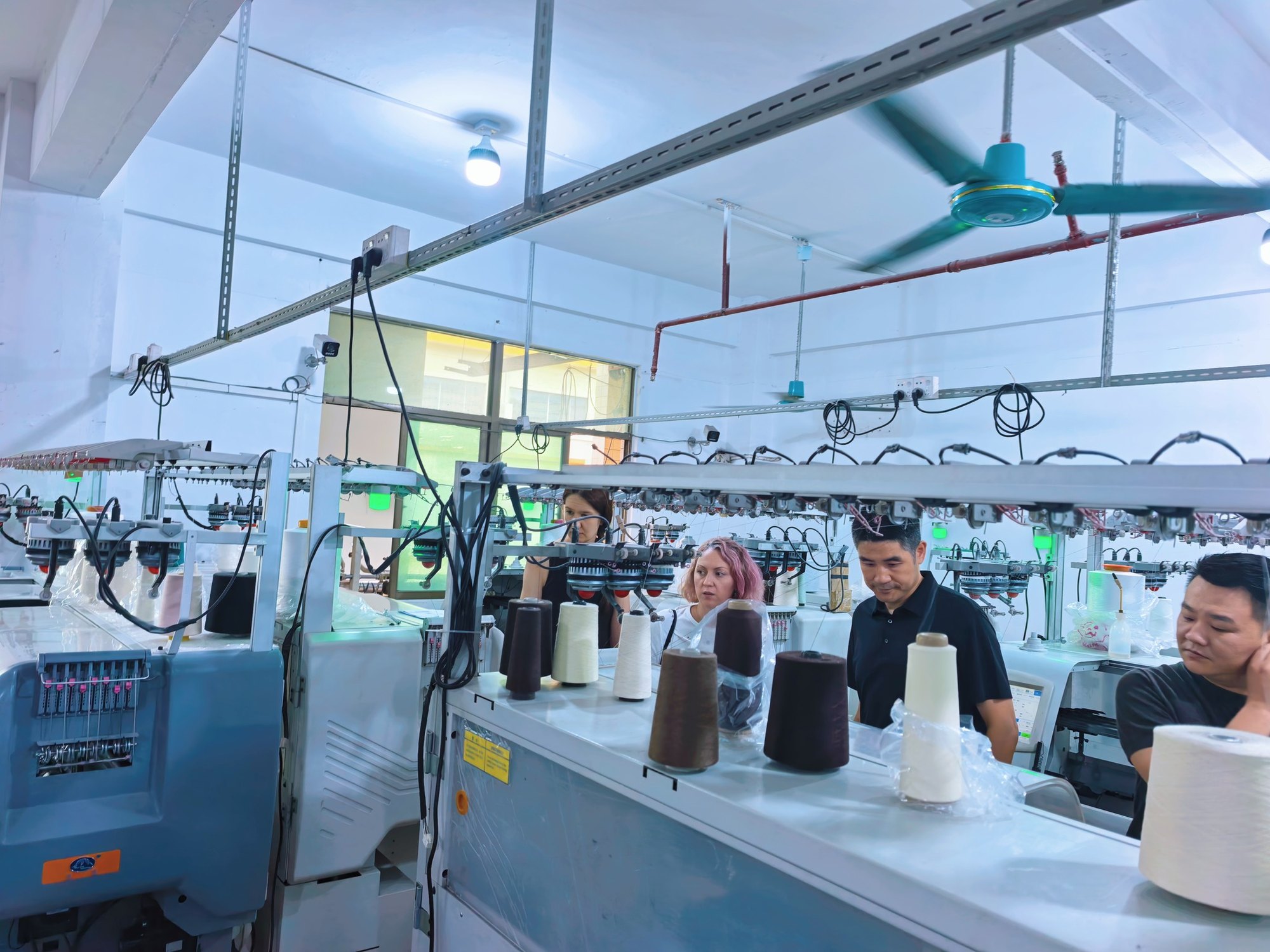
On 28 October 2026, customers visited SANYE’s knitted cover-up production line and reviewed samples prepared for their projects. The conversation extended from the manufacturing process to product development details, including yarn thickness, twist and ways to combine knitwear with lace.
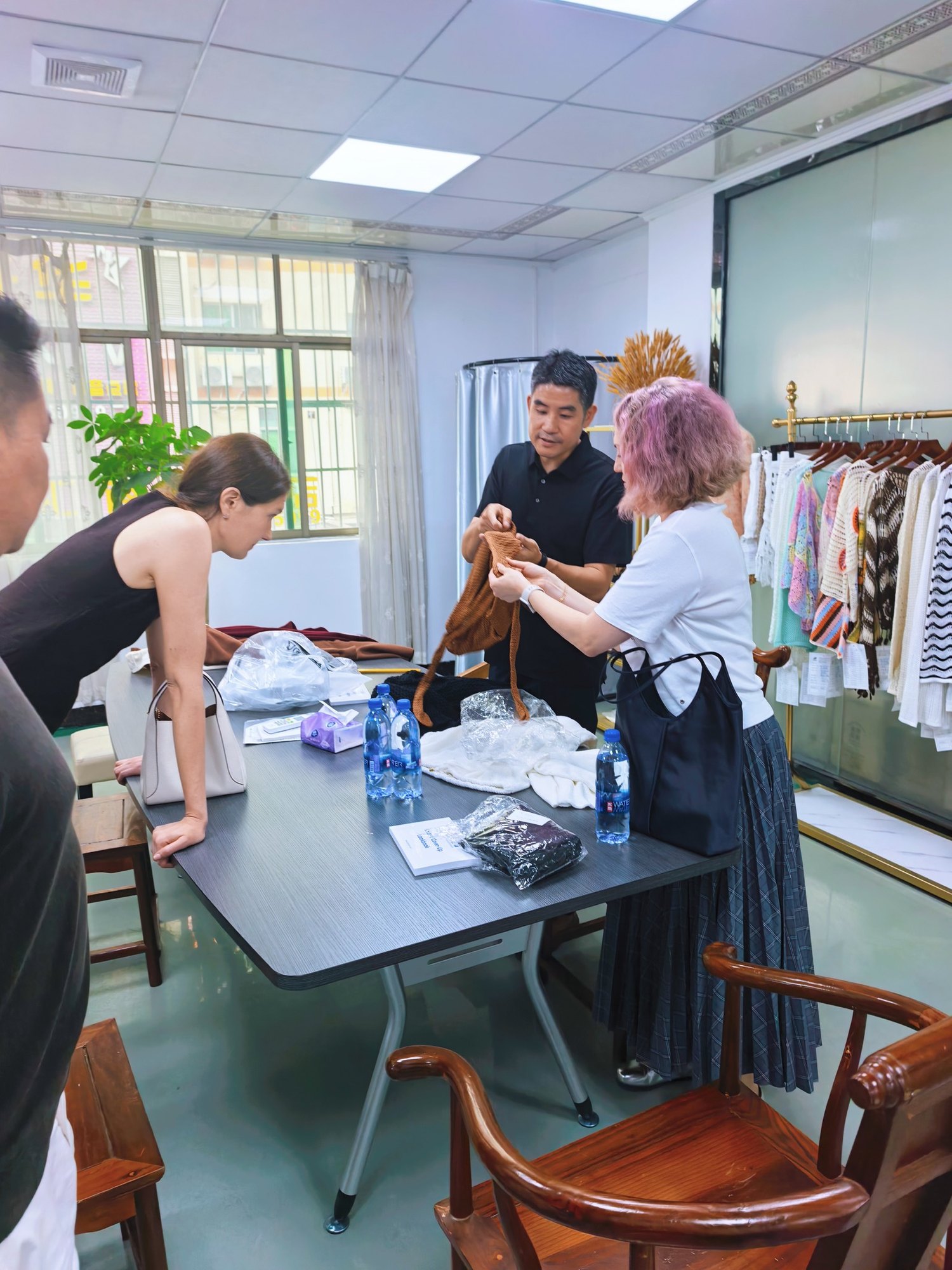
A detailed discussion around physical samples
The visitors brought a knowledgeable perspective to the exchange. Using samples as a shared reference, both teams discussed the appearance of the knit, the degree of twist in the yarn and how these details relate to development requirements.
Reviewing garments in person gave the conversation a practical basis. Both teams could consider the overall style, examine the knitted texture more closely and relate descriptions of appearance and handle to an actual sample.
Exploring knitted garments with lace accents
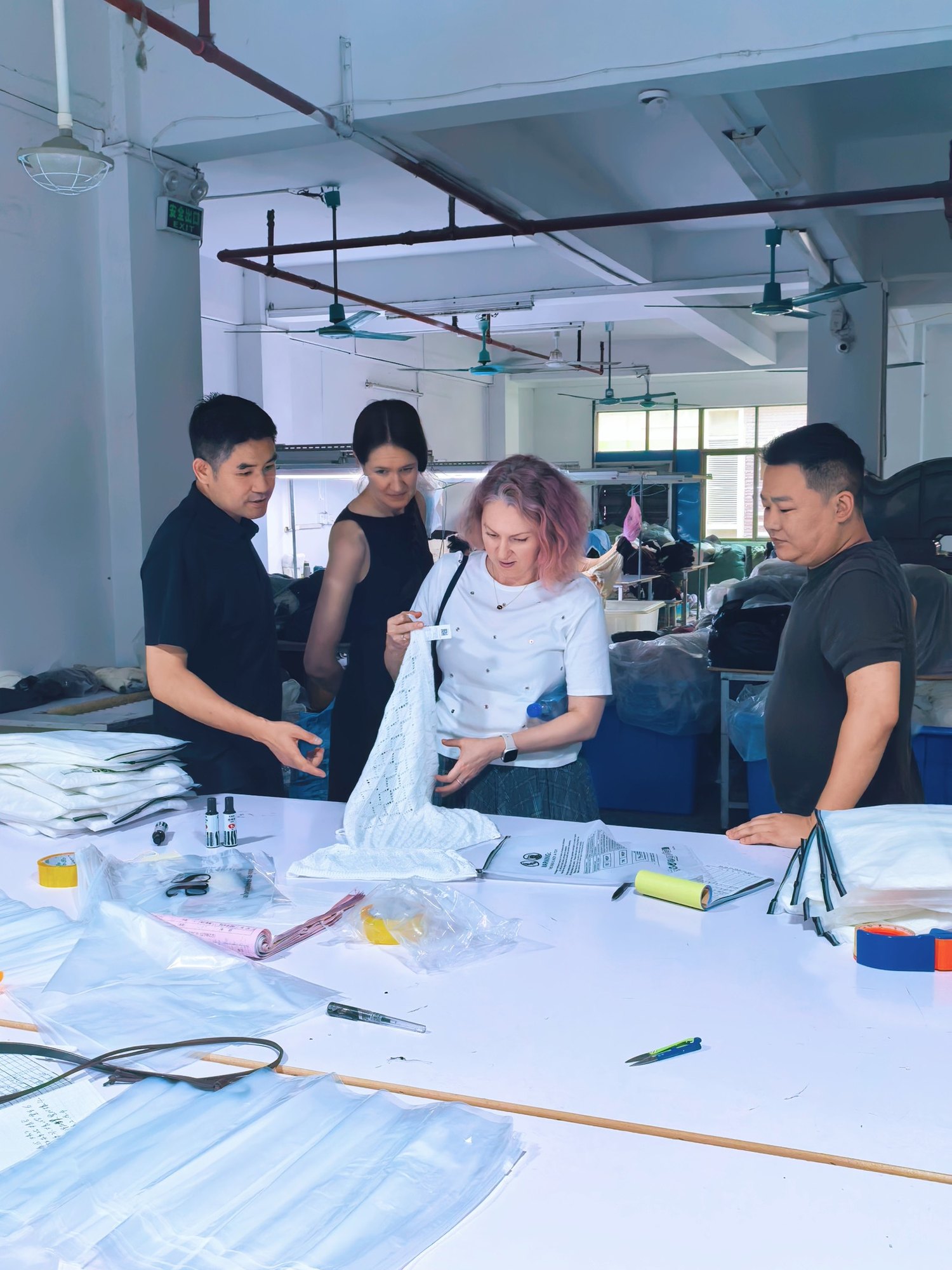
The combination of knitwear and lace was another topic discussed during the visit. In the approach explored, knitting forms the main garment body, while lace is generally used as a decorative accent and sewn to the knitted section.
This brought the relationship between the garment body and its decoration into the development conversation. For an individual style, the lace placement, visible proportions and joining method would need to be defined further through design references and sampling.
Following the production sequence
During the tour, the SANYE team introduced the main stages of knitted cover-up manufacturing in production order.
Design → Yarn winding → Machine knitting → Panel linking → Washing → Pressing → Quality inspection → Packing
Yarn winding prepares yarn for the knitting stage, when machines produce the garment panels. In SANYE’s usual panel-based construction approach, the front and back are knitted separately and joined through panel linking to form the garment body. Construction details vary by style. The team also introduced washing, pressing, quality inspection and packing.
Connecting the production tour with customer samples
Alongside the tour, the team and visitors examined customer samples in the showroom and viewed knitted garments in the production area and beside the inspection and packing worktable. Seeing samples together with an introduction to the production stages connected the finished garments with the process behind them.
We appreciate the customers’ thoughtful and technically informed discussion. From yarn thickness and twist to combining knitwear with lace, the exchange helped both teams understand development requirements more clearly and establish a useful basis for the next sampling conversation.
For a closer look at the development considerations, read our technical guide: Combining Knitwear and Lace: Yarn Count, Twist and Sewing Parameters.
SANYE develops knitted cover-ups for swimwear and resortwear collections. Explore our knitted swimwear cover-ups to discuss a development and sampling project.